wadi rum
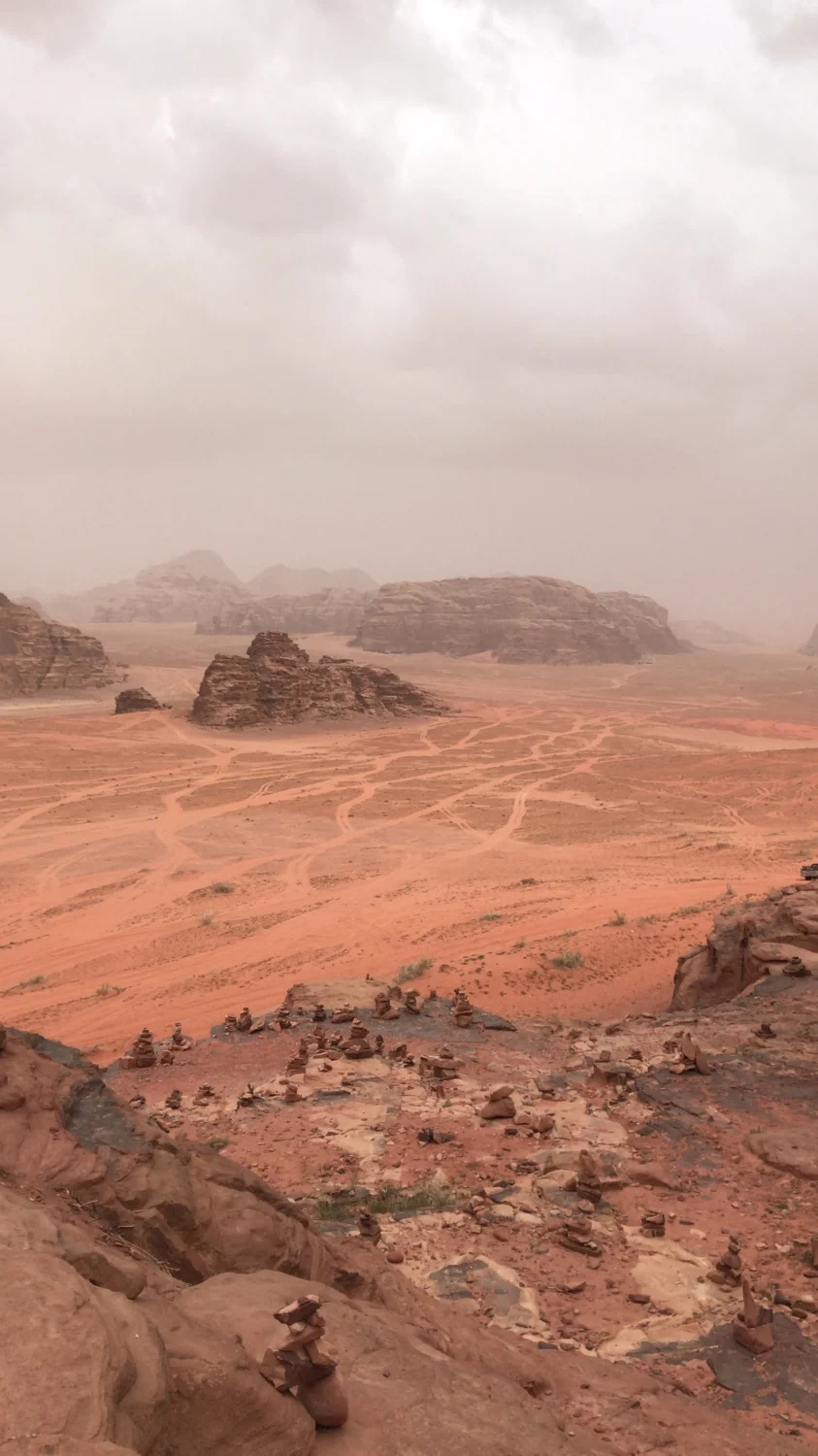
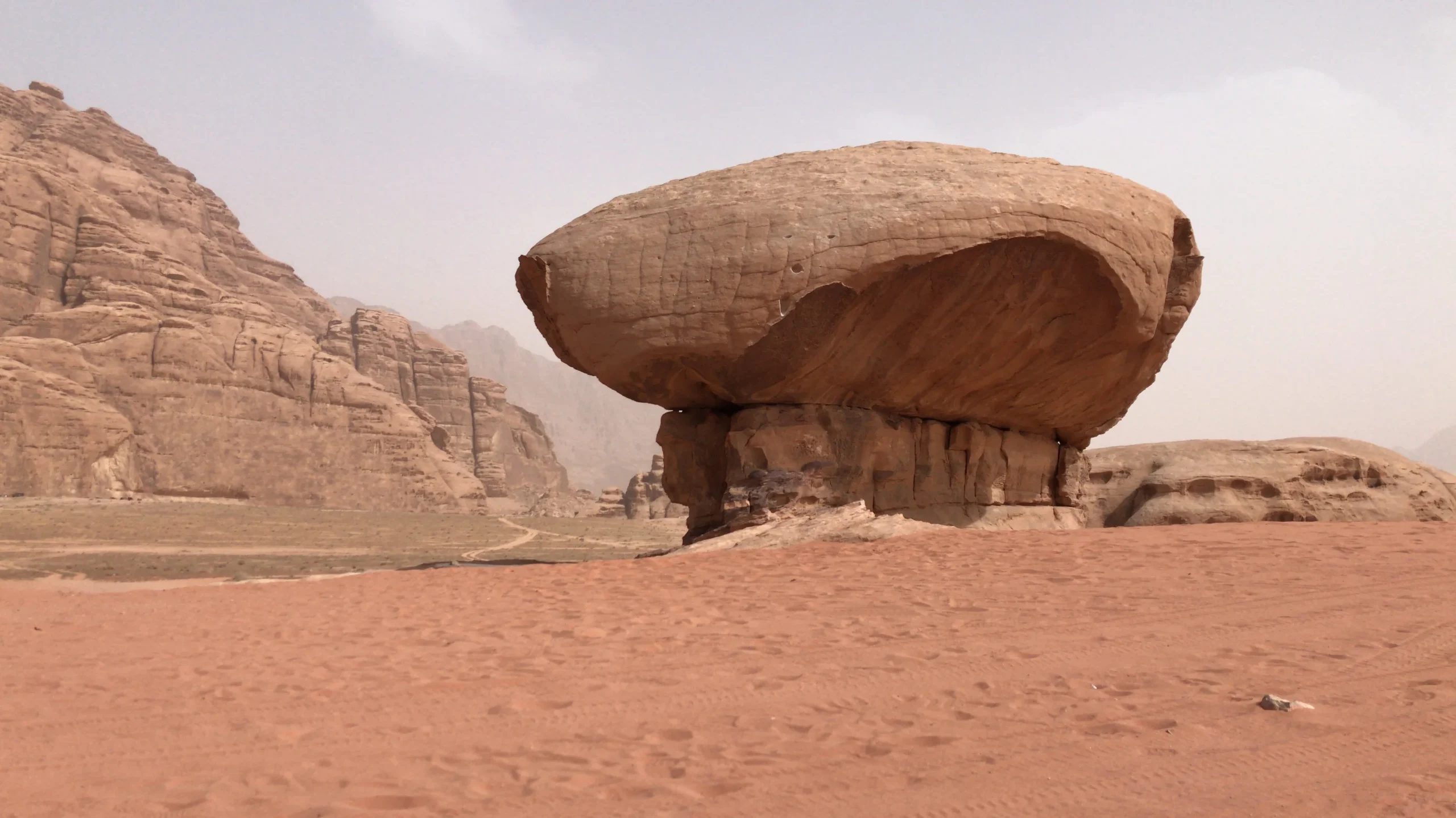
After leaving Aqaba, the journey continued inland to Wadi Rum, Jordan’s famous desert valley also known as the “Valley of the Moon.” This vast, otherworldly landscape is defined by towering sandstone mountains, sweeping dunes, and a silence that feels almost eternal. Spending the night in the desert allowed for a deeper experience, blending adventure, history, and culture.
Safari tours across the sands revealed sites connected to T.E. Lawrence — “Lawrence of Arabia” — who organized and inspired the Arab Revolt in these very lands. Petroglyphs etched into stone walls told stories of ancient tribes, their carvings depicting humans, animals, and daily life. These rock drawings, some thousands of years old, offered a glimpse into how people once moved through and understood the desert.
Our guide shared more than history. He introduced us to a desert plant whose sap could be used like soap, a natural survival tool passed down through generations. At night, the camp came alive with music and laughter under a sky filled with stars. Dinner was a highlight: the traditional Zarb, a Bedouin dish cooked in an underground sand oven. The preparation involves layering rice at the bottom, vegetables above, and meat on the top, all sealed beneath the hot desert sand. Hours later, the meal emerges infused with smoky flavors — simple, communal, and unforgettable.
Exploring further, we came across an Ottoman-era train, a remnant of the Hejaz Railway, built in the early 20th century to connect Damascus to Medina. Once vital for pilgrims traveling to Mecca, parts of it were destroyed during the Arab Revolt, linking the rails to the dramatic history of the desert.
Wadi Rum was more than a place to see — it was a place to feel. The vastness of the desert, the weight of history, and the warmth of Bedouin hospitality created a unique atmosphere, making this stretch of Jordan both timeless and deeply human.