gothenburg
After leaving Malmö, we traveled to Gothenburg (Göteborg), Sweden’s second largest city and a major cultural and economic hub on the country’s west coast. Founded in the early 17th century by King Gustavus Adolphus, Gothenburg developed into an important seaport and still has a strong maritime character today. The city is known for its canals, green parks, and vibrant cultural life.
In Gothenburg, we stayed at Center Hotel. However, we did not connect much with the city’s atmosphere, and the overall energy did not match our expectations. Despite this, we explored some key places. One highlight was the Feskekörka (literally “Fish Church”), a famous indoor fish market hall built in 1874 with a design resembling a Gothic church. From here, we bought meatballs and other local food and enjoyed them at Kungsparken, one of the city’s oldest parks with wide green areas and canals.
We also visited Haga, Gothenburg’s oldest district, with wooden houses, cobblestone streets, and cozy cafés. Haga represents the Swedish lifestyle philosophy that values simplicity, coziness, and balance – very similar to the Danish concept of hygge. This cultural mindset contributes greatly to the high happiness levels in Scandinavia, where daily life emphasizes community, outdoor activities, and comfort without excess.
Another spot was Skansen Kronan, a 17th-century fortress located on a hill overlooking the city, originally built to defend Gothenburg. From the top, there are wide views of the city and harbor. We also saw the Poseidon statue, an iconic landmark at Götaplatsen square, symbolizing Gothenburg’s maritime spirit.
In the evening, we went for a walk and saw people playing a traditional Swedish throwing game using heavy metal weights. The objective is to throw these weights as accurately as possible toward targets on the ground, testing both strength and precision. This activity is a local recreational tradition that blends skill, strategy, and social interaction, often enjoyed in parks during summer evenings.
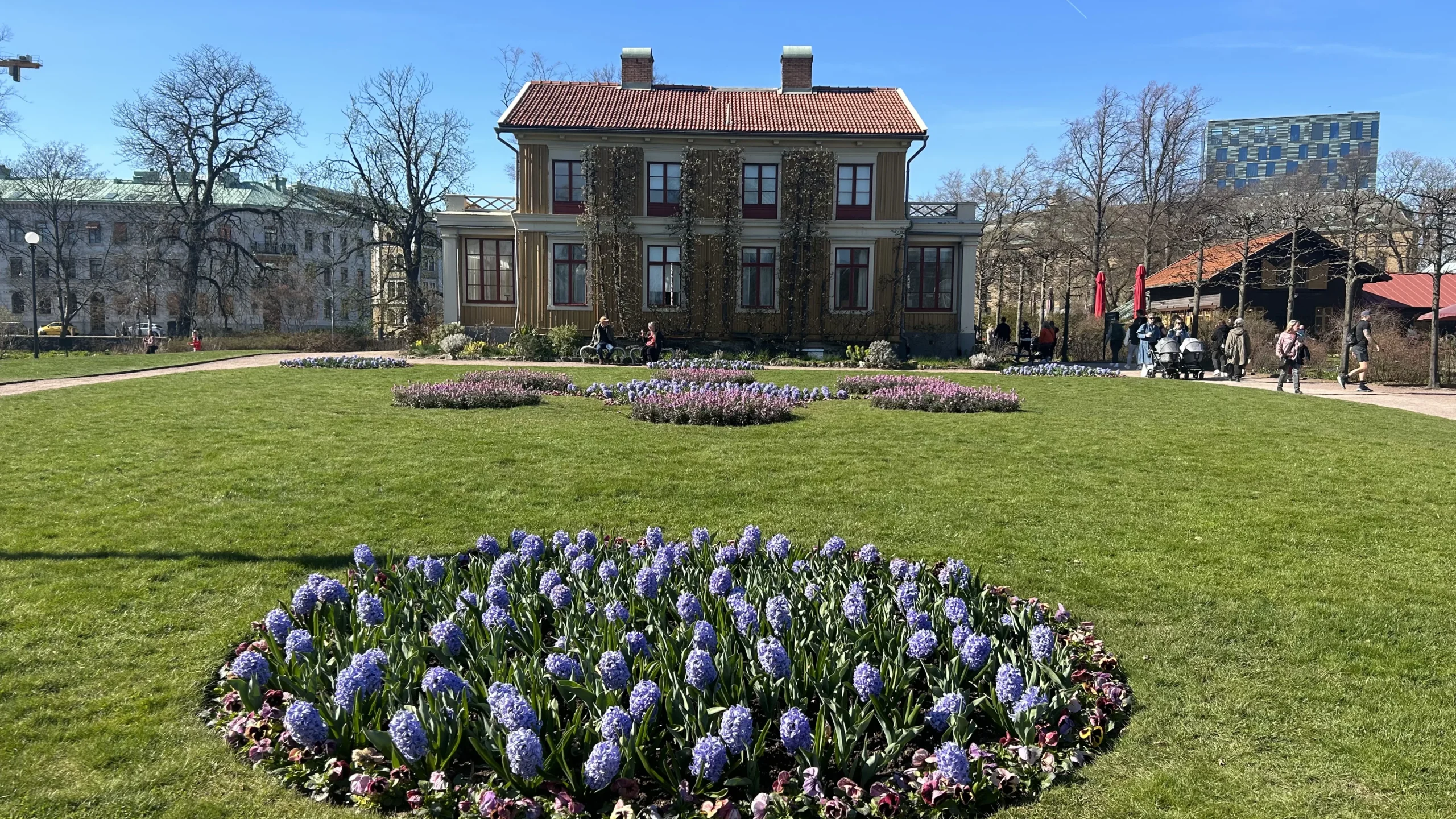
Finally, we visited The Garden Society of Gothenburg (Trädgårdsföreningen), one of Europe’s best-preserved 19th-century parks. It features wide lawns, flowerbeds, and a historic Palm House, a glass conservatory filled with exotic plants. The park is both a cultural heritage site and a relaxing green space, showing the city’s commitment to combining urban life with nature.